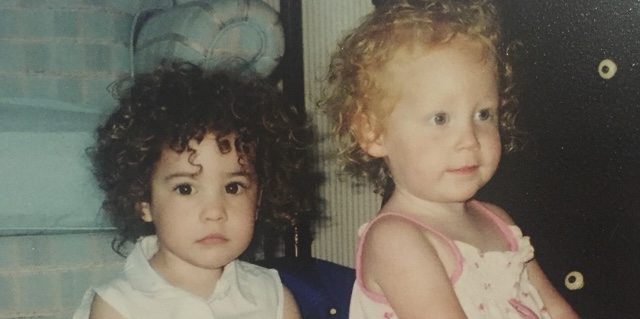
Warning: A break from regular content! I hope my vulnerability can lead you through an article worth reading.
I had a sentimental revelation this week – I have hair dysmorphia. I genuinely believe that wearing my hair naturally curly makes me less attractive than when I straighten my hair.
Now, I know what you’re thinking: “Literally who cares?”
Fair question. It’s also a real question. My hair has nothing to do with anything going on in the world right now, my hair does not affect anyone around me, and I will not be changing the course of time writing this article. However, this does torture me, and it represents some deeper lies I have believed about myself. Women have a common ground of constantly feeling like there’s something we need to fix about ourselves. I hope this article can help you address what’s specific to you.

We are VERY good
In Genesis, you see God call creation “good”. After He adds human life into the picture, He calls creation “very good”. This makes me somewhat emotional – He really likes us. Enough to say that about us after creating literally everything.
In my personal prayer time, I told God I wanted to see myself like He sees me. I’m not talking about a crown on my head, being sinless, and all that biblical jazz. I just want to feel very good; good enough to where I don’t have to think about myself much at all. I think we all wish we felt this comfortable with ourselves.
Well, the funny thing about prayer is, God answers.
Pride is a False Savior
We all struggle with pride, and spoiler alert, we always will. But when we substitute times of humility, reflection, and accountability with pride, we have an issue. We stunt our own growth, hurt others around us, and begin to believe lies about ourselves (positive or negative). Pride has two toxic forms; arrogance and insecurity.
Pride is something God is working through in me, specifically around insecurities. I always thought I needed to “fix” myself. He’s shown me it’s not my own work that matters, but His restoration. He’s been walking me through some unlearning. In His provision to substitute the things I don’t understand, He’s shown me an example I can understand – my hair.
Stick with me – I know this example sounds ridiculous, but I’ll walk you through why this matters to me, and what it represents.

Bouncy Background
I lost my mom when I was 7 years old. Every mom is a manager: you know your kids favorite foods, you manage their schedule, you set them up to be the most successful they can be, etc. When you lose your mom, you lose that security blanket. Disclaimer: my dad and grandma did an amazing job amidst this time, and I do not want to ignore that.
I found myself grieving the small things alongside the large things when I lost my mom. I never felt “put together” after we lost her, and there isn’t anyone who can fill that void. I can’t explain all these “unkempt” feelings, but what I can say is, it feels unfortunate. I struggled to feel like, and learn what it meant to be, a woman.
Here’s the thing, I’ve always had CURLY hair. If not curly, certainly frizzy. In hindsight, it fits my personality really well, but was puzzling for my mom who had pin-straight hair. She would sit with me for what felt like hours detangling my hair. No brush was safe – we broke a TON of brushes and combs. Once pony tails were placed in my hair, they either had to be cut out, or lost in the curly abyss forever. It was a whole science, but something we turned into quality time.
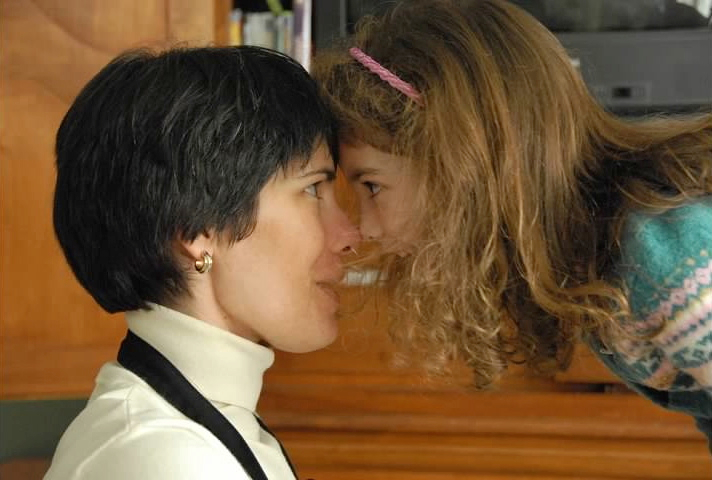
However, when I lost my mom, my hair became a burden. Curly hair specifically is a lot to take care of, and felt like an impossible task for that 7 year old girl. I also struggled to consistently take care of myself in general, but my hair felt the most exposed, and I was violently insecure about it.
I remember walking up to a projector in elementary school (yes a projector it was the 2000s) and hearing multiple kids snickering about my hair. I remember hearing girls say their mom “straightened their hair for them before school” and feeling like I also wanted someone to help me do that. I remember crying after every haircut I got because my hair seemed to curl up even more after those skillful scissors. I didn’t have my mother to help me socially understand why those kids were being rude, help me change up my hair, and help me find the stylist who was right for me. I simply internalized everything, and came to the conclusion that I needed some fixing to become the person I wanted to be; pretty, in control, and admired.
When I learned how to straighten my hair, I felt like I started to fit in. I felt pretty and could relax with the curly hassle. Kids weren’t mean anymore, and I happened to get compliments. I didn’t realize what was forming here. This wasn’t just a fun activity to change my hair up – I started to place a lot of my value and image in it.
What followed were years of lies I allowed myself to believe. It lasted from seven years old until my 24th birthday. Feeling unkept and lazy with curly hair, genuinely believing my reflection was prettier with straight hair, feeling embarrassed when my hair was frizzy, etc.
What other people thought was so beautiful about me, for some reason, I thought was the exact opposite. I somehow associated something so natural about me with being a hindrance to the point where I couldn’t even see myself with curly hair. The fun fact is, no one thought of me any different with my curls. Really, who cares? And if they did, the problem lies with them. But I didn’t believe that for the longest time. It was a vicious, insecure cycle that took place in my own mind.
It’s Not Confined to Curls
This feeling seems to find its way to a lot of women. You don’t have to lose a parent or even be bullied to experience this. From what I’ve heard, I don’t think a lot of us feel very good about ourselves. There’s always some lie we’ve internalized that makes us feel like we constantly need to be “fixed”, or something about ourselves we pay too much attention to.
Maybe it’s the advertisements we see every day about products that can “fix us”, maybe it’s the social media that praises specific features few of us have, maybe it’s culture teaching us to only discuss what we want versus what we’re content with. Or, maybe, it isn’t just external. Maybe we have a nasty case of pride.
This type of pride isn’t fun either. This isn’t the type of pride to make you puff up your chest and talk about how great you are (which I also don’t recommend). It isn’t false humility where you tell the whole room you don’t think of yourself as much as you think of others when you want to appear selfless (I also don’t recommend this).
This is the type of pride that appears when you’re embarrassed and want to mitigate the blow to your image. This type of pride appears when you’re vulnerable and you hate that weak feeling. This type of pride is refusing to cry in front of others. This type of pride is a shield used to make sure you are never hurt in the way you were again. This type of pride compares you to others, whether you’re using that person to uplift yourself, or drag yourself down.
Humility Amidst Humidity
The truth is, few of us are actually willing to be accountable for this type of pride. It takes humility. Humility is not an easy feeling like we glorify it to be. People say they admire humble people, when actually, they tend to place humble people beneath them. Even though humility is quite beautiful, it doesn’t feel beautiful. Humility is in the moments we realize we were wrong. Humility is being genuinely vulnerable with others. Humility is being okay with doing big things and no one caring. Humility is sitting in those “weak”, “unnoticed”, and uncomfortable moments. Who likes to see themselves in that spot? As far as I’m concerned, only Jesus sought out that experience. There’s a whole book in the Bible that doesn’t mention God. And He’s GOD.
But maybe humility isn’t where we are at our weakest. Maybe that’s where we are our strongest, most genuine, and authentic. Practicing humility is freeing. It’s starting to meet yourself where you’re at, and accepting who you are when you meet that person. Not only have I felt this, but I’ve seen this in other people’s lives as well. It’s placing the worry about your image down for a second. It’s getting help after admitting you’ve needed it. It’s having communion with others because you show up authentically. It’s speaking out about what’s been torturing you, all for it to lose its power over you. Believe it or not, you head to a place better than you were before because you’re finally taking some accountability.
This is my challenge to you – actually practice some humility. Admit an insecurity to yourself, no matter how silly it is. I’m writing an article about my hair for goodness sake – we’re way past silly.
After meeting yourself with said insecurity, sit in that exposed feeling. What drove you to feel that way? Talk to some trusted people about it. Maybe admit you need help. I think you’d also be shocked how many people struggle with the same things you do. Many people will tell you the very thing you dislike about yourself is something they admire about you. Or even better yet, it’s something people never noticed about you.
Don’t get me wrong – do not double down on feeling bad about yourself. To have an insecurity then beat yourself up for pride is NOT the goal here. This suggestion is to help pinpoint something deeper rooted in all of us that we may do well with pruning off.
Straightening my curly hair allowed me to curate an image of myself, but I was burying a deeper issue. My issue with my hair was reflecting an issue in my heart. It was an issue that kept me from being authentic with others. It was an issue that compared me to others. My pride made me want to always appear on top of everything and everyone. I wanted to be “perfect”. I never wanted to be the weak one in the room. Also, I never met myself with genuine accountability. I just let the pride continue to dictate my actions, and in the meantime, burn my finger on a straightening iron or two.
Curly Conclusion
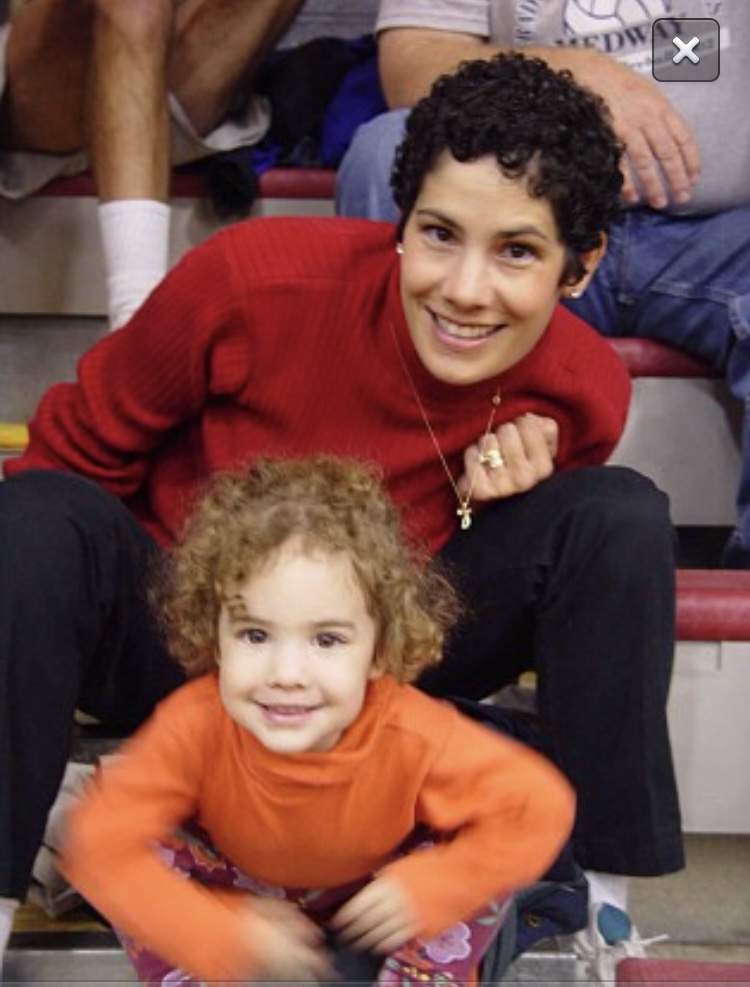
I started wearing my hair natural again. This hasn’t been a beautiful, mind-restoring process. I convulsed when I saw how frizzy my hair was in my car door reflection today. I still get a weird feeling that my face looks better with my hair straight. This was 24 years of taming my curly beast – I’ll give my vanity some grace getting used to it again.
Does this mean I’ll permanently keep it curly? No. I will do whatever I want. But now, there’s this tiny thing inside me smiling about my ringlets. Something really pure I can appreciate about myself. Something that makes me me. Something that makes me want to hug that 7 year old girl and tell those projector kids to stay mad. Something that doesn’t compare myself to the straight hair, but takes the pressure off of my hair completely. Something where my value doesn’t depend on my hair that day, or even my looks at all. Something where my insecurities are losing their grip on me. Something that applies to more than my hair, but my heart.
I want everyone to have this free feeling. It’s not easy, and it fluctuates, but you deserve to feel very good about yourself. God is not a liar – you should feel very good about yourself.
When my mom went through chemo, she lost her pin-straight hair. When it grew back, it was CURLY. The mystery of where I got my curls was solved!
As I grow into a healthier stage of life, I’m allowing my hair to be curly too. What a special feature I get to share with her.


 A Thousand Words